
Our Human Rights are Under Attack, but What Does That Actually Mean?
October 24, 2025
Once again, President Trump’s administration is making history for all the wrong reasons. On August 28, the United States withdrew from the Universal Periodic Review (UPR) process. This marks the first time in UPR history that a United Nations Member State has refused to take part in its own review.
Yet just because the US doesn’t want their human rights record questioned doesn’t mean they are unaccountable to its human rights obligations! Woodhull was in Geneva in 2010 when the United Nations held its first ever review of the United States. The UPR is a vital process in holding nations accountable for human rights abuses.
Human rights are central to Woodhull’s work. It’s our mission to “affirm sexual freedom as a fundamental human right”. We know, though, that when people hear “human rights violations” they think of other countries and not ours. It can also be challenging to integrate human rights into our battles to retain or obtain civil rights. That’s why we are kicking off our series to demystify the language of human rights, so when we say, “sexual freedom is a fundamental human right,” you have concrete examples of how this is tied to everyone’s ability to:
- develop and express our unique sexuality;
- be personally autonomous with regard to bodily integrity and expression;
- and enjoy sexual dignity, privacy, and consensual sexual expression without societal or governmental interference, coercion, or stigmatization
This series will tackle the sometimes elusive and confusing meaning behind human rights, including:
- how they are connected to defending and protecting our sexual freedom;
- what this means for you, your family, and your community.
What is the Universal Periodic Review?
The UPR is a process in which members of a Working Group within the United Nations’ Human Rights Council assess each UN Member States’ fulfillment of their human rights obligations and commitments. In other words, over the course of the UPR cycle, which happens every 4.5 years, the human rights situation in each of the 193 countries that make up the UN is evaluated to identify any human rights improvements as well as address challenges or abuses.
This evaluation is based on:
- A “National Report” drafted by the country under review
- Reports from independent human rights experts and groups
- Stakeholder reports, including from national human rights institutions
- Reports from civil society organizations (AKA non-government organizations) like Woodhull
The information contained in these documents is then assessed according to each country’s human rights obligations set out in:
- The UN Charter
- The Universal Declaration of Human Rights (UDHR)
- Human Rights Treaties that the country has ratified
- Voluntary pledges and commitments, like national human rights policies
- Applicable international humanitarian law
How has sexual freedom as a fundamental human right been addressed in prior US reviews?
In prior Universal Periodic Reviews of the United States, UN Member States, human rights experts and groups, and NGOs addressed the country’s human rights record relating to sexual freedom. Some examples of this have included making statements and recommendations relating to:
Reproductive Freedom
- Protect abortion access and end racial disparities in maternal health care (Statement by Center for Reproductive Rights and Ipas Partners for Reproductive Justice, UPR 2020)
Sex Work
- Ensure access to public services and end violence and human rights abuses against sex workers (Recommendation by Uruguay in partnership with Woodhull and our allies, UPR 2010)
Gender Justice
- Address violence against the LGBTQ community, especially the disproportionate levels of violence committed against transgender women of color (Recommendation by Malta, UPR 2020)
Where is the US in the current UPR process?
Unsurprisingly, the US, under the current administration, is refusing to engage in the UPR. President Trump removed the US from the Human Rights Council (HRC) on February 4, did not submit a national report as part of the UPR by the August 4 deadline, and officially withdrew from the UPR on August 28. In November 2025, the HRC Working Group is scheduled to hold its review of the submissions for the UPR of the US, but with the country refusing to participate, the future of the review remains uncertain.
Woodhull has been outspoken in calling on the United Nations to proceed with the UPR of the United States, even if the federal government refuses to participate. Our allies in this work have also been undeterred; human rights defenders from across the country joined forces on October 23, 2025 to hold the People’s UPR. Together we are documenting the Trump administration’s human rights abuses and flagrant disregard for the systems meant to keep the government’s powers in check. We still have a voice, and we will hold the US government accountable! This is why it is critical to understand your rights, not just in US law but also as defined in international law.
Why does this matter to you?
The Supreme Court has stripped people’s right to access lifesaving healthcare like abortions and gender-affirming procedures. States throughout the country have passed invasive age verification laws that undermine our right to privacy and freedom of expression, and the Supreme Court has ruled such laws Constitutional. The federal government has deployed military personnel in cities from coast-to-coast and ICE is disappearing migrants into concentration camps.
All of these abuses and attacks can feel overwhelming, but it’s crucial to remember that we are not powerless. One critical lever of power we hold is to document and report on human rights abuses. This is especially important as the White House favors the erosion of rights over its duty to protect them and the government institutions and lawmakers meant to be a check on the administration’s powers are failing to act. With this series, we will bring the Universal Declaration of Human Rights to life. We will provide clear definitions of the Articles relevant to protecting our sexual freedom and provide you with real-world examples of how these rights play out in the issues most important to Woodhull, including:
- Privacy
- Gender Justice
- Free Speech
- Sexual Health and Pleasure
- Sex Work
- Sexual Violence
- Reproductive Freedom
- Families and Relationships
- Disability Justice
- Economic Justice
- Racial Justice
To learn more and share the series, follow us on:
Update 11/17/2025: On November 7, 2025, at the 50th session of the UPR, the Human Rights Council’s Working Group was set to conduct the United States’ review. The US, however, did not show up at the UN in Geneva to participate. Since the US federal government has refused to engage in the process, the HRC announced that they would postpone the United State’s review until the 53rd session of the UPR Working Group, scheduled for November 2026. Read more about the decision here.
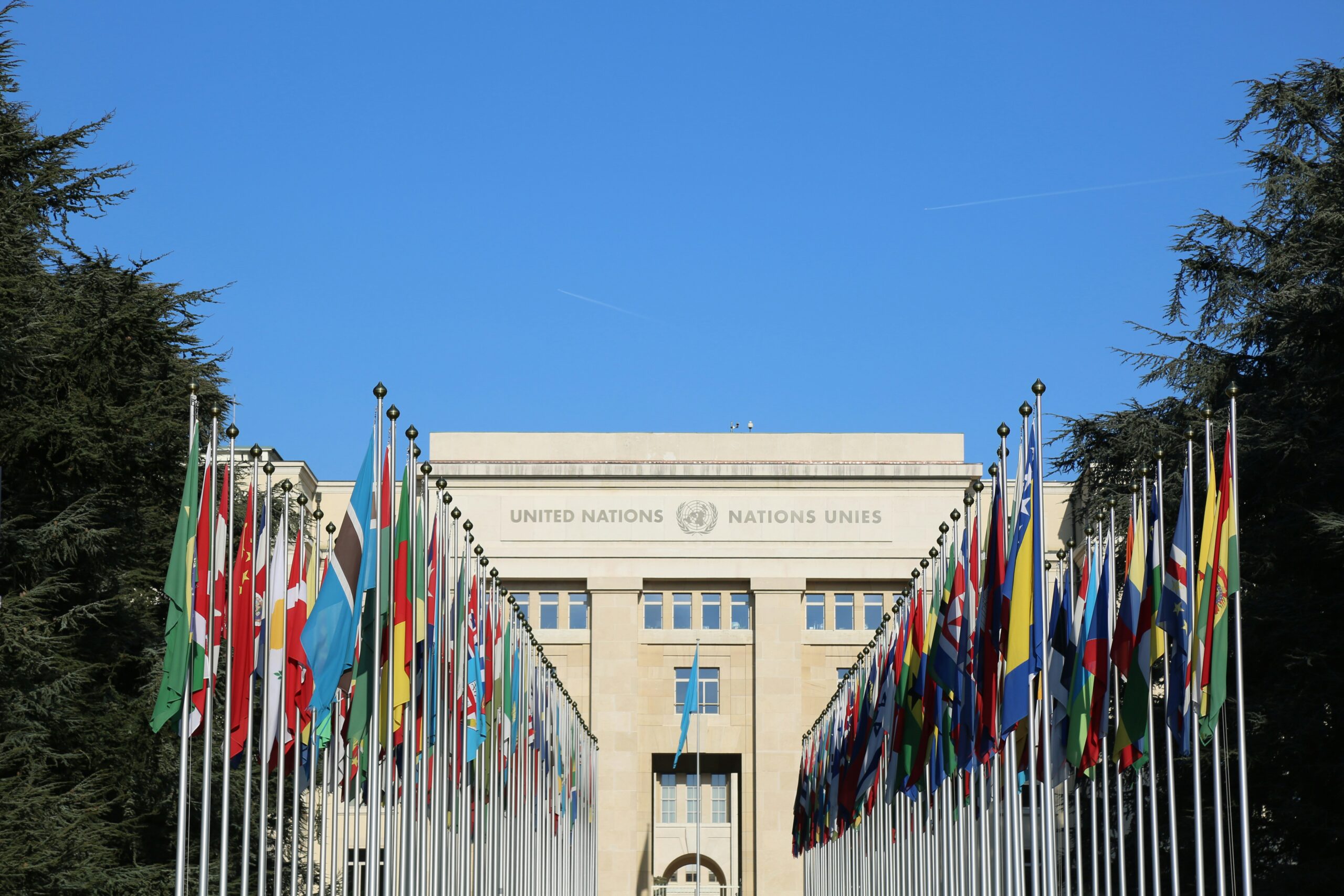
A photo of the United Nations Geneva Entrance, a building with a lot of flags in front of it (Photo by Salya T via Unsplash)