
Woodhull Watchlist: Supreme Court Term 2025-2026
October 23, 2025
Last Updated: July 9, 2026
On Monday, October 6, 2025, the US Supreme Court began hearing cases scheduled for the 2025-2026 term. At Woodhull, we are closely watching several cases that impact free speech, LGBTQIA+ rights, and gender justice. These cases are part of what is known as the “merits docket”, which means each case includes a deliberative process involving:
- Oral arguments before the Justices
- Full briefing from parties involved in the case
- Possible “friends of the court” briefings for parties not involved in the case, but who wish to provide additional information for the Court to consider
- Signed opinions by the Court, including transparency on how each Justice voted
SCOTUS Merits Docket
- Issues:
- Free Speech, LGBTQIA+ Rights
- Question Presented:
- Does a Colorado law banning “conversion therapy” violate the Free Speech Clause of the First Amendment?
- Case Background:
- Kaley Chiles, an Evangelical Christian counselor practicing in Colorado Springs, Colorado, brought the case to challenge Colorado’s 2019 law, which bans “conversion therapy” for minors. Many medical providers, including mental healthcare practitioners, have discredited “conversion therapy” for both its harms and false claims regarding its practices meant to change a person’s sexual orientation or gender identity and expression. LGBTQIA+ people and LGBTQ+ rights organizations have advocated against “conversion therapy,” leading several states to pass laws protecting youth from this dangerous practice.
- The Alliance Defending Freedom (ADF), a far-right Christian legal organization, is representing Chiles in the case. The Southern Poverty Law Center (SPLC) designated the ADF as an anti-LGBTQ+ hate group. This case furthers ADF’s long history of using the courts to erode LGBTQIA+ rights and reproductive justice. The organization spearheaded Dobbs v. Jackson, which overturned Roe v. Wade, and 303 Creative v. Elenis, which enabled businesses to seek free-speech exemptions from nondiscrimination laws.
- Oral Arguments:
- Held October 7, 2025
- Updates on Proceedings and Filings:
- Woodhull Position:
- LGBTQIA+ people are entitled to live as their whole selves and be free from treatment that seeks to change their sexual orientation or gender identity. “Conversion Therapy” is a cruel and dangerous punishment and a violation of Article 5 of the Universal Declaration of Human Rights, which protects us from torture or cruel, inhuman, or degrading treatment.
- Woodhull urges the Supreme Court to rule against the plaintiffs in this case and maintain states’ ability to protect the rights, health, and well-being of LGBTQIA+ youth and their families.
- Analysis of Oral Arguments:
- During oral arguments in front of the Supreme Court on October 7, 2025, the majority of Justices seemed likely to rule in favor of the plaintiff and strike down Colorado’s “conversion therapy” ban. Such a decision could invalidate laws protecting LGBTQ+ youth from “conversion therapy” in two dozen other states. Woodhull awaits the Justices’ final decision on the case, which is expected at the end of the current term.
- Woodhull Statement on Oral Arguments:
- “The Chiles v. Salazar decision underscores a difficult but essential truth: we must protect LGBTQ+ people from harm without undermining the fundamental freedoms that safeguard all of our rights. “Conversion therapy” is dangerous, discredited, and has caused real, lasting harm; we oppose it unequivocally. But when the government controls the pen, it decides which lives are visible and which are silenced, setting a dangerous precedent that could be used to restrict conversations about sexual health, reproductive care, gender identity, and sexual expression. This ruling does not make “conversion therapy” acceptable—it draws a constitutional line around government control of speech. We must meet this moment by educating the public, advancing evidence-based policy, and electing leaders who will protect LGBTQ+ communities without sacrificing the First Amendment rights that make that advocacy possible.”
– Ricci Levy, Woodhull President and CEO
- Woodhull Statement on SCOTUS Ruling:
-
- Woodhull Freedom Foundation fights for LGBTQ+ rights and free speech, both of which are intrinsic to protecting everyone’s human right to sexual freedom. While we vehemently oppose the harmful and discredited practice of “conversion therapy”, we must also weigh the potential harms to free speech represented by this case. After careful analysis of the Supreme Court’s ruling in Chiles v. Salazar, we have concluded that the adverse implications on free speech would have been severe if SCOTUS had upheld the Colorado law banning “conversion therapy”. This would have opened the door for states to censor mental health therapists from voluntarily discussing issues such as abortion and birth control, sexual health, and a myriad of other topics related to sex, sexuality, and gender expression.
- The 8-1 ruling handed down on March 31, which was also International Transgender Day of Visibility, determined that Colorado’s “conversion therapy” ban is presumptively unconstitutional because it “censors” talk therapists. The decision to release this ruling on a day meant to uplift our trans community members felt particularly cruel in a moment of relentless attacks against LGBTQ+ people in the United States. This is undeniable, but we also must consider the narrow application of this ruling, as it only relates to how conversion therapy can be regulated. SCOTUS did not rule that “conversion therapy” is safe, effective, or ethical.
- At Woodhull we remain clear on the fact that “conversion therapy” is harmful and poses an extraordinary danger to the LGBTQ+ community. Ultimately, the remedy for laws regulating this practice is at the ballot box, though, not by sacrificing First Amendment rights. This means voting for lawmakers who champion LGBTQ+ rights and for ballot initiatives that protect LGBTQ+ communities. As part of this effort, we must inform the voting public about the facts on gender expression and sexual orientation, which is why we have our Fact Checked by Woodhull series and will soon be publishing an article on the harms of “conversion therapy”. We encourage everyone to stay informed and share the facts! Learn more about the decision in this case and its implications for LGBTQ+ rights and free speech here:
- Supreme Court Rules Against Conversion Therapy Bans On Transgender Day Of Visibility
- ‘The Court Did Not Say Conversion Therapy Is Safe, Effective, Appropriate or Ethical’
- Unpacking the Supreme Court’s conversion therapy decision
- Supreme Court Rules Colorado Conversion Therapy Ban Likely Violates First Amendment, But Leaves Malpractice And Other Legal Claims Intact
- Issues:
- Trans Rights, Gender Justice
- Question Presented:
- Does the Constitution’s Equal Protection Clause prohibit states from designating girls’ and women’s school sports teams based on students’ biological sex determined at birth?
- In other words, are transgender girls’ and women’s constitutional rights and protections violated when state laws ban them from participating on sports teams that align with their gender identity?
- For further details on the rights of LGBTQ+ and gender-diverse students in schools, as well as important terminology, see the Education Law Center Fact Sheet and the Trans Language Primer.
- Does the Constitution’s Equal Protection Clause prohibit states from designating girls’ and women’s school sports teams based on students’ biological sex determined at birth?
- Case Background:
- In 2020, Idaho enacted a law banning transgender girls and women from participating on female sports teams in public schools (elementary through college). The law allows anyone to challenge an athlete’s participation on a female-designated team. This requires the athlete being challenged to undergo an invasive medical process that may include examination of their reproductive anatomy, genetic makeup, or testosterone levels. Both transgender and cisgender athletes may be forced to undergo this invasive medical process.
- Boise State University student, Lindsay Hecox, who is a transgender woman and wished to join the school’s women’s cross-country team, challenged the law along with a cisgender high school athlete who filed as Jane Doe. In the suit, they argue that the Idaho ban violates their constitutional rights, including the 14th Amendment’s Equal Protection Clause. The Clause guarantees everyone within the United States (citizen or not) equal protection before the law. As such, the plaintiffs are challenging the ban on the grounds that it unconstitutionally discriminates against transgender student athletes and targets both transgender and cisgender student athletes by exposing them to intrusive sex verification processes.
- A district court granted a preliminary injunction blocking the law from taking effect. The case has since gone through several rounds of appeals. The Supreme Court will be reviewing lower court decisions in the case. It may make a ruling that determines the level of protection transgender people receive under the Equal Protection Clause.
- Oral Arguments:
- Held January 13, 2026
- Updates on Proceedings and Filings:
- Woodhull Position:
- Laws banning transgender students from playing on the school sports teams that allow them to participate as their authentic self are cruel and interfere with transgender students’ access to safe and nondiscriminatory educational settings.
- Woodhull urges the Supreme Court to rule in favor of the plaintiffs in this case to ensure transgender students have their constitutional rights protected under the Equal Protection Clause.
- Analysis of Oral Arguments:
- Included below under West Virginia v. B.P.J.
- Woodhull Statement on Oral Arguments:
- Included below under West Virginia v. B.P.J.
- Issues:
- Trans Rights, Gender Justice
- Questions Presented:
- Does Title IX or the Constitution’s Equal Protection Clause prohibit states from designating girls’ school sports teams based on students’ biological sex as determined at birth?
- In other words, are transgender girls’ constitutional and Title IX rights and protections violated when state laws ban them from participating on sports teams that align with their gender identity?
- For further details on the rights of LGBTQ+ and gender-diverse students in schools and important terminology, see the Education Law Center Fact Sheet and the Trans Language Primer.
- Does Title IX or the Constitution’s Equal Protection Clause prohibit states from designating girls’ school sports teams based on students’ biological sex as determined at birth?
- Case Background:
- The plaintiff in the case, B.P.J., is a transgender girl who wanted to participate in her school’s girls’ track team. Three years ago, when B.J.P. was in middle school, she was initially prevented from running on the track team because of West Virginia’s law prohibiting transgender girls from participating in girls’ sports in middle school, high school, and college. B.P.J. then sued in federal court, arguing that the ban on transgender students’ participation in school sport teams aligned with their gender identity violates her and students like her constitutional rights under the Equal Protection Clause and Title IX protections. The Equal Protection Clause guarantees everyone within the United States (citizen or not) equal protection before the law; Title IX is the federal law prohibiting sex discrimination in education. As such, B.J.P. is challenging the ban on grounds that it unconstitutionally targets transgender student athletes and violates Title XI protections against sex-based discrimination.
- A lower federal court issued an injunction in the case, which has allowed B.J.P. to participate in her school’s cross-country and track and field girls’ teams. The Supreme Court will review lower court decisions in the case and may issue a ruling that determines the level of protection transgender people receive under the Equal Protection Clause and Title IX.
- Oral Arguments:
- Held January 13, 2026
- Updates on Proceedings and Filings:
- Woodhull Position:
- Laws banning transgender students from participating in school sports that align with their gender identity are cruel and interfere with transgender students’ access to safe and nondiscriminatory educational settings.
- Woodhull urges the Supreme Court to rule in favor of the plaintiff in this case to ensure transgender students are rightly protected against sex discrimination in schools and have their constitutional rights protected under the Equal Protection Clause.
- Analysis of Oral Arguments in Little v. Hecox and West Virginia v. B.P.J.:
- On January 13, 2026 the Supreme Court heard oral arguments in both Little v. Hecox and West Virginia v. B.P.J. These are the two pivotal cases before the court that challenge state laws in Idaho and West Virginia that ban transgender girls and women from playing on grade school through university-level sports teams that allow them to participate as their authentic selves. During oral arguments, the majority of justices expressed skepticism that these bans violate the 14th Amendment’s Equal Protection Clause or Title IX protections against sex-based discrimination in educational settings.
- This does not mean the Supreme Court is necessarily set to make a definitive ruling on the constitutionality of state bans against transgender students participating in sports teams aligned with their gender identity. The Supreme Court may not strike down the Idaho and West Virginia bans while also avoiding a ruling on the constitutionality of such laws. In other words, we can anticipate a ruling unfavorable to protecting trans rights, but the justices may take the narrower path and determine that such bans do not violate Title IX protections, while leaving open the question of whether they violate the equal protection clause of the Constitution. Read further analysis of the cases and their hearings, here and here.
- Woodhull Statement on Oral Arguments:
- “From the federal to the state level, US lawmakers are carrying out calculated and devastating attacks against transgender people. The Supreme Court now has a chance to put the brakes on this relentless rollback of trans rights in the country. At Woodhull, we fear that the justices will not fulfill their sacred oath to discharge justice impartially with respect to everyone’s equal rights before the law, and will instead use their extraordinary judicial power to help tear down the legal scaffolding protecting this community. While the cases heard before the court consider trans women and girls’ access to play sports, the impact is more devastating than a sports ban. The SCOTUS rulings in these cases also send a clear message to all trans people about their place in American society. We urge SCOTUS to uphold its constitutional duty to protect all people’s rights equally and express forcefully that trans people are welcome here and that their lives matter and will be protected.”
– Ricci Levy, Woodhull President and CEO
- Woodhull Statement on SCOTUS Rulings:
-
- On June 30, 2026, SCOTUS handed down their 6-3 ruling in Little v. Hecox and West Virginia v. B.P.J. allowing states to ban transgender student athletes from women’s and girls’ sports. The conservative justices ruled in the majority while the three liberal justices dissented on equal protections. Justice Kavanaugh wrote the ruling for the majority, which was narrower than feared.
-
- The ruling does not create a nationwide ban on transgender girls and women from playing on their schools’ girls and women’s teams. Instead, the decision holds that Title IX allows schools to decide a student’s eligibility to play on women and girls’ sports teams based on “biological sex.” In other words, this ruling creates both opportunities for states and schools to maintain policies allowing transgender students to play sports on the teams that aligns with their gender. It also creates a pathway for states and schools to ignore medical and scientific considerations and create or continue to enforce bans against transgender students participating in their schools’ sports teams.
-
- The timing of this decision, released on the last day of Pride Month, also cannot be overlooked. During a month dedicated to celebrating LGBTQ+ communities throughout the United States and globally, marking the final day of June with a ruling that hurts Transgender people is heartbreaking. Even with a ruling that is not the “worst-case scenario”, we remain deeply saddened by this decision that undermines’ transgender students’ simple desire to participate fairly and equally in sports. And with this, have their humanity, dignity, and constitutional and human rights recognized and protected.
-
- While we are disheartened by this ruling, we are not defeated. At Woodhull, we will continue to lead with the facts about gender and sex, including on issues related to transgender athletes. We will keep advocating for transgender people’s access to sports, because it isn’t just about playing a game, it’s about knowing you are welcome and belong in your school and broader community. Every student, every young person, deserves this.
-
- To learn more about the SCOTUS ruling and to hear from our allies defending Transgender rights, see the below articles and statements on Little v. Hecox and West Virginia v. B.P.J.:
-
-
- Supreme Court Rules Title IX Means “Biological Sex” In Devastating Anti-Trans Ruling: The ruling will likely give the Trump administration more ammunition to go after colleges and schools across the country. – Erin Reed
-
-
-
- A Narrow SCOTUS Ruling Ensures Trans Athletes Remain a Campaign Issue: The Court didn’t ban anything: It rubber-stamped the states that already had bans, left twenty-three states a choice, and kept the issue on every ballot — exactly as intended. – Ari Drennen
-
-
-
- Supreme Court’s conservatives OK trans sports bans: Kavanaugh wrote the court’s opinion, but Sotomayor dissented to explain for the liberal trio what the court got wrong about equal protection law. – Chris Geidner
-
-
-
- Trans youth athletes vow to keep playing after US supreme court ruling: Justices upheld laws in West Virginia and Idaho, boosting similar restrictions in 25 other states – The Guardian
-
-
-
- National Center for LGBTQ Rights Responds to the Supreme Court’s Decision on Transgender Student Athletes – National Center for LGBTQ Rights
-
First Choice Women’s Resource Centers, Inc. v. Platkin
- Issues:
- Free Speech, Reproductive Justice
- Case Background:
- First Choice Women’s Resource Centers is a faith-based “crisis pregnancy resource center” that sued New Jersey’s Attorney General after being served a subpoena for its donor list. In the suit, the Center argues the subpoena violates its First Amendment rights to free speech and association by chilling its ability to receive donations due to its religious and anti-abortion views. Crisis pregnancy resource centers are known to appear as health clinics while being run by anti-abortion activists who try to persuade pregnant people seeking abortions not to pursue this medical care. The Center argues that, given the controversial nature of its operations, being compelled to release its donor list may deter potential donors from giving if they fear their status as donors could be made public as part of a state investigation.
- The Center is also arguing that a lower court wrongly dismissed its case by holding that federal courts lack jurisdiction to hear the claim until the state court orders compliance. As a result of the case, SCOTUS may determine whether challenges to state subpoenas on free speech grounds can be heard in federal court, protecting donor privacy, or whether states are allowed to pursue such investigations, potentially without federal oversight. The case is therefore a test of how effectively state authorities can regulate organizations that attempt to interfere with pregnant people’s abortion access, and whether those organizations can be compelled to disclose information about their operations and donors as part of an investigation.
- Question Presented:
- Can organizations challenge state actions in federal court to protect their federal First Amendment rights, or are they required to litigate in state court first?
- Oral Arguments:
- Held December 2, 2025
- Updates on Proceedings and Filings:
- Woodhull Position:
- Although Woodhull vehemently disagrees with the plaintiff’s (and all anti-abortion crisis pregnancy centers) mission to interfere with people’s access to lifesaving medical care, we recognize the significance of this case on free speech and association protections. We defend the First Amendment even to protect speech we dislike. We will always fight for everyone’s right to privacy, including our donors’, and this case presents major challenges to those rights.
- Woodhull urges the Supreme Court to rule in favor of the plaintiff to protect access to a federal forum for First Amendment claims and to rein in government actors’ use of subpoenas and other investigatory tactics to silence opponents across the political spectrum. Our position reflects that of other staunch defenders of free speech, including the ACLU and the Foundation for Individual Rights and Expression (FIRE).
- Analysis of Oral Arguments:
- During oral arguments in front of the Supreme Court on December 2, 2025 the justices appeared ready to rule in favor of the plaintiff in the case, First Choice Women’s Resource Centers Inc. Both conservative and liberal justices seemed sympathetic to the plaintiff’s arguments, leaning towards allowing them to challenge New Jersey’s subpoena in federal court due to concerns about First Amendment rights, particularly donor privacy and potential government overreach. A majority of the justices expressed doubts about the state’s broad demands and indicated skepticism of the state’s argument that the subpoena was not yet a final, enforceable order.
- Woodhull Statement on Oral Arguments:
- “Woodhull is unequivocally opposed to the practices of First Choice Women’s Resource Center, and all ‘crisis pregnancy centers’. These types of organizations actively work to erode sexual freedom by impeding people’s access to lifesaving sexual and reproductive healthcare, including abortions. We in no way defend this work, and at the same time, we see this case as emblematic of government overreach across the political spectrum aimed at silencing oppositional voices. Chilling constitutionally protected speech is antithetical to protecting sexual freedom. Woodhull, therefore, is hopeful that the justices will rule in favor of the plaintiff in this case to protect free speech, including freedom of association.”
– Ricci Levy, Woodhull President and CEO
- “Woodhull is unequivocally opposed to the practices of First Choice Women’s Resource Center, and all ‘crisis pregnancy centers’. These types of organizations actively work to erode sexual freedom by impeding people’s access to lifesaving sexual and reproductive healthcare, including abortions. We in no way defend this work, and at the same time, we see this case as emblematic of government overreach across the political spectrum aimed at silencing oppositional voices. Chilling constitutionally protected speech is antithetical to protecting sexual freedom. Woodhull, therefore, is hopeful that the justices will rule in favor of the plaintiff in this case to protect free speech, including freedom of association.”
- Woodhull Statement on SCOTUS Ruling:
- On Apr 29, 2026, the Supreme Court made a unanimous 9-0 decision siding with the plaintiff First Choice Women’s Resource Center. While Woodhull vehemently disagrees with the Center’s anti-abortion mission as a so-called “crisis pregnancy center”, we support SCOTUS’s ruling in the case. The Justices determined that a subpoena issued by the New Jersey attorney general demanding access to First Choice’s documents and donor information violated the organization’s First Amendment associational rights.Ultimately, this case was not determining the merits of these anti-abortion groups and their practices that interfere with people’s access to reproductive healthcare. This was a case about First Amendment protections and ensuring non-profit organizations can operate without undue government overreach. At Woodhull, we defend freedom of speech and association, even for groups whose speech and practices we disagree with. We are relieved by this ruling because we also want to protect our supporters, including those who donate to Woodhull, especially at this moment when groups defending sexual freedom are attacked by politicians at all levels of the government. This ruling makes it clear that such government interferences are unconstitutional.
SCOTUS Shadow Docket
In addition to the merits docket, Woodhull monitors the emergency docket, also known as the “shadow docket”. Throughout President Trump’s first and second terms, his administration has increasingly utilized the shadow docket to make extremely consequential decisions via this opaque and expedited system. In such cases, there are no oral arguments, and Justices are not required to issue opinions that explain their reasoning for a ruling and provide transparency on how each Justice voted. The administration’s reliance on “shadow docket” cases and the willingness of the Supreme Court to issue high-stakes decisions via this system are deeply disturbing and set a dangerous precedent.
In May 2026, access to mifepristone, the medication most often prescribed for abortions, was threatened in Danco Laboratories, LLC v. Louisiana. The case came about when Louisiana sued the Federal Drug Administration (FDA), Louisiana v. FDA, arguing that the FDA’s policy allowing medical providers to prescribe the pill remotely and have it mailed to patients interfered with state abortion bans. The US Fifth Circuit Court had previously ruled in Louisiana’s favor which led drug manufacturer Danco Laboratories, whose only product is mifepristone, to seek immediate relief from the Supreme Court to maintain nationwide access to the mail-order abortion pill. On May 14, 2026, SCOTUS ruled 7-2 in a shadow-docket decision to block the lower court ruling and keep in place nationwide access to mail and telehealth mifepristone prescriptions.
- At Woodhull, we are relieved by this ruling that helps people across the country access abortion care. This majority decision helps protect people’s right to health and bodily autonomy. We also recognize that this ruling is not a permanent fix, and mail-order and telehealth access to abortion pills is still under threat. Louisiana’s challenge of the FDA policy now returns to the lower court and will likely be heard in front of the Supreme Court again for a final, merits-based ruling.
We closely tracked Trump v. Orr, which determined whether the Trump administration’s discriminatory ban on gender-neutral markers on passports could stand.
Update 11/7/2025: SCOTUS rules Trump administration can implement discriminatory anti-transgender, anti-nonbinary passport policy
- On November 6, 2025 the Supreme Court’s six Republican appointees ruled in favor of the Trump administration’s ban on gender neutral markers on passports. Justice Ketanji Brown Jackson wrote in a dissent (opposition of the ruling) on behalf of the three Democratic appointees that the order is, “…part of a broader pattern of this Court using its emergency docket to cavalierly pick the winners and losers in cases that are still pending in the lower courts.“
- Learn more about the case and the SCOTUS ruling from journalist and trans rights advocate, Erin Reed, here.
To stay up to date on all our work to defend and protect sexual freedom as a fundamental human right, follow us on social media:
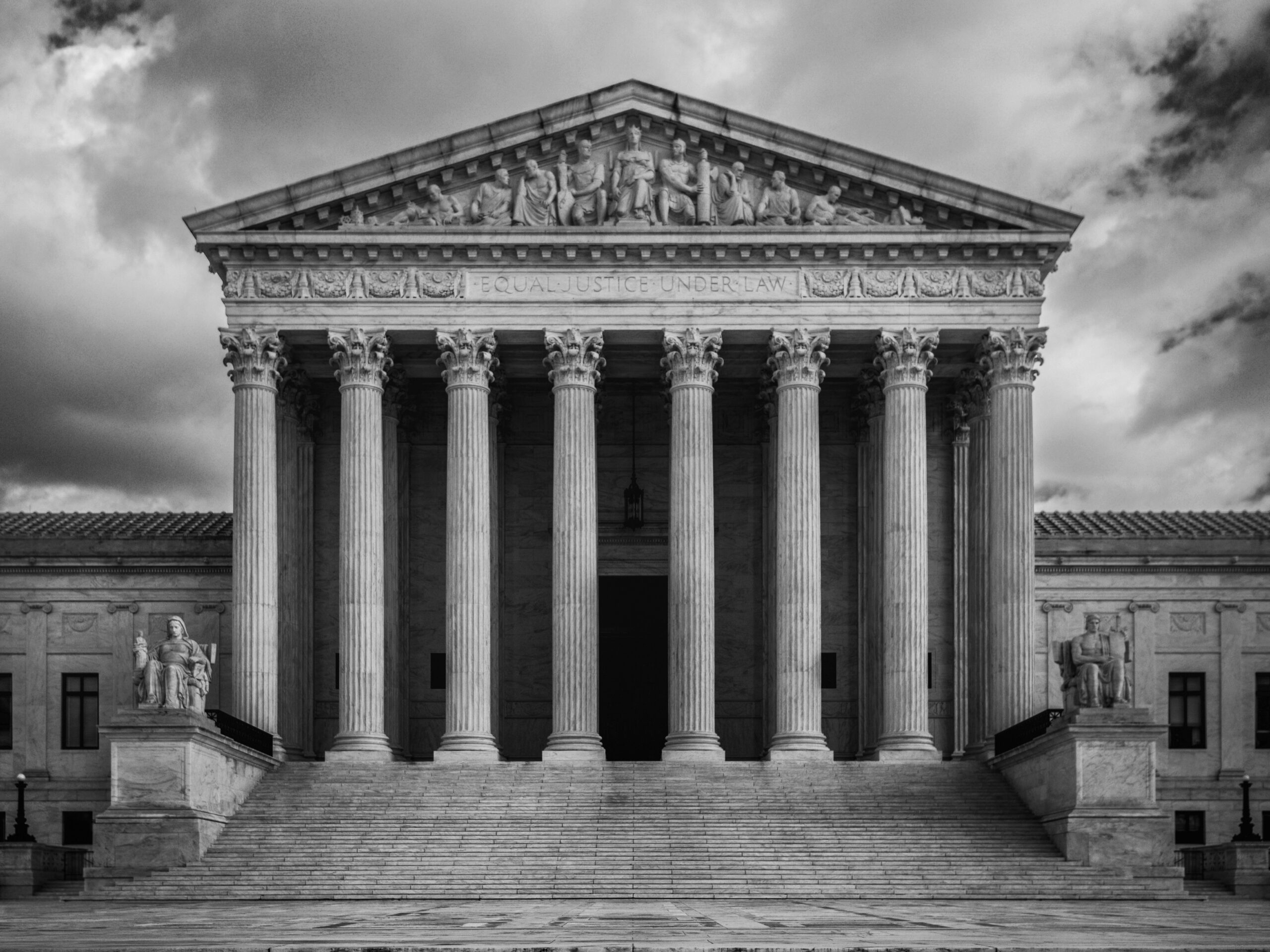
A black and white photo of the Supreme Court building in Washington, DC. (Photo by Tim Mossholder via Unsplash)