
What’s Happening with Sex Work Decriminalization in 2026?
June 2, 2026
Since 2019, several states have introduced bills that would decriminalize sex work. Throughout this time, Woodhull Freedom Foundation has championed these efforts by uplifting sex worker-led advocacy and working alongside local organizers to educate state lawmakers. In our advocacy we lead with the facts: sex work decriminalization is the legal model sex workers’ support because it best ensures the safety and dignity of all people involved in commercial sex, including by preventing exploitation.
In the past seven years, we have been encouraged by the progress made with more and more states introducing legislation to decriminalize sex work every legislative session. In 2026, seven states considered decriminalizing sex work, including Wisconsin (AB1193), Colorado (SB097), New York (S02513; A03251), Rhode Island (S2399; H8057), Illinois (SB3390), Massachusetts (H1980), and Vermont (S0054; H0190). At Woodhull, we have met with lawmakers to advocate for these decriminalization bills to protect sex workers’ rights and improve community safety.
While we are seeing progress in the sex worker rights movement and the nationwide push for decriminalization, this legislative session has also revealed the roadblocks that persist. This was exemplified in Colorado, where the state Senate was considering SB097, a bill to “Decriminalize Adult Commercial Sexual Activity.” Don’t Strip Our Rights, a sex worker-led organization based in Denver was an organizing force behind getting the legislation introduced. In their advocacy, they emphasized the importance of decriminalizing sex work in Colorado to end violence in the sex trade and protect the health and rights of those most directly harmed by sex work criminalization, including Black, Brown, and LGBTQIA+ sex workers and criminalized survivors.
In March of this year, we prepared testimony to present at a public hearing on SB097 in the Colorado Senate Judiciary Committee. We looked forward to supporting Don’t Strip Our Rights and other local and national sex worker rights advocates. In our testimony we clearly laid out how the bill would make the sex trade safer by protecting sex workers’ health and rights while preventing human trafficking. The day before the hearing, however, we learned we would not have the chance to present this testimony since the sponsor chose to postpone the bill indefinitely and not hold a public hearing.
Due to the pervasive myths about sex work, public hearings on decriminalization legislation are critical. In our testimony, we would not only be educating lawmakers on the facts about sex work and decriminalization, but also the public. This is crucial to end stigma against sex workers and ensure policies are based on the evidence and not sensationalistic and moralistic arguments against sex work.
Public hearings are also an invaluable space where sex workers can inform the legislative process and laws that directly impact their rights, safety, and livelihood. Sex workers must be able to participate in this process safely and fairly. We remain hopeful that this is possible in Colorado as Don’t Strip Our Right’s Founding Director, Devynn Dewey, expressed, “Though our bill did not succeed this session- the tone globally is shifting behind sex worker-led and centered legislation. We’ll keep trying in Colorado until we win, and we’re proud to stand with our community in change.”
While we push for public hearings on sex work decriminalization bills across the country, sex worker advocates aren’t waiting to be given the chance to educate lawmakers. In New York, sex worker advocates organizing with Decrim NY, held a lobby day to meet one-on-one with legislators and their staff. This allowed advocates to show up in force at the state capital and demonstrate to lawmakers the broad and growing support for decriminalization among their constituents. Woodhull has been there for these lobby days, organizing alongside sex worker advocates in the state to inform New York state lawmakers about the urgent need to decriminalize sex work statewide.
As described by a representative for Decrim NY, “This May, Decrim NY built off our momentum of advocacy for Cecilia’s Act for Rights in the Sex Trades (“Cecilia’s Act”, S2513/A3251) while preparing for our 2026 focused lobby day at our state’s capitol. Workers, persons of lived experience, and advocates of all kinds met face-to-face with legislators to inform and demand real support for community: co-sponsorship to life-saving legislation. Our bill addresses the most vulnerable and marginalized communities in New York – especially those facing an increased risk of arrest, harassment, and deportation. Our effort, with the support of our community partners and advocates, centers workers, their stories, and their experiences. Alongside this day of advocacy, Decrim NY is excited to expand coalition efforts in 2026 with upcoming community care and fundraising plans in the works.
Cecilia’s Act for Rights in the Sex Trades (“Cecilia’s Act”) would amend New York law so that consenting adults who trade sex, are clients of sex workers, or support sex workers—including workers themselves—are not criminalized. It would also remove eligible sex work convictions from criminal records.”
We conclude this year’s legislative session grateful for sex worker rights organizers across the country who keep showing up to push for decriminalization year after year. We applaud these efforts which will lead us to the day when sex work is decriminalized across the United States.
Now, we look ahead bolstered by Don’t Strip Our Right’s optimism to reintroduce a decriminalization bill in Colorado, Decrim NY’s unwavering dedication to realizing sex work decriminalization in New York, and the dedication of advocates in every state advancing sex work decriminalization legislation. In future legislative sessions, we will continue to present the facts that sex work decriminalization protects everyone’s human rights, safety, and health by:
- Removing the threat of arrest, which abusers, including police, use to coerce sex workers into performing services under duress or controlling victims of trafficking.
- Creating safer dynamics between sex workers and clients, improving client screening and condom use, which lowers STI transmissions and improves public health.
- Allowing sex workers to use harm reduction and safety tools, including seeking social, medical, or legal services without fear of legal repercussions.
To learn more read our Fact Checked by Woodhull series on sex work and watch our program, Checking the Facts About Sex Work! In the series, we dispel harmful myths about sex work and present accurate information to help combat discriminatory practices, reduce violence against sex workers, and promote access to healthcare and legal protections.
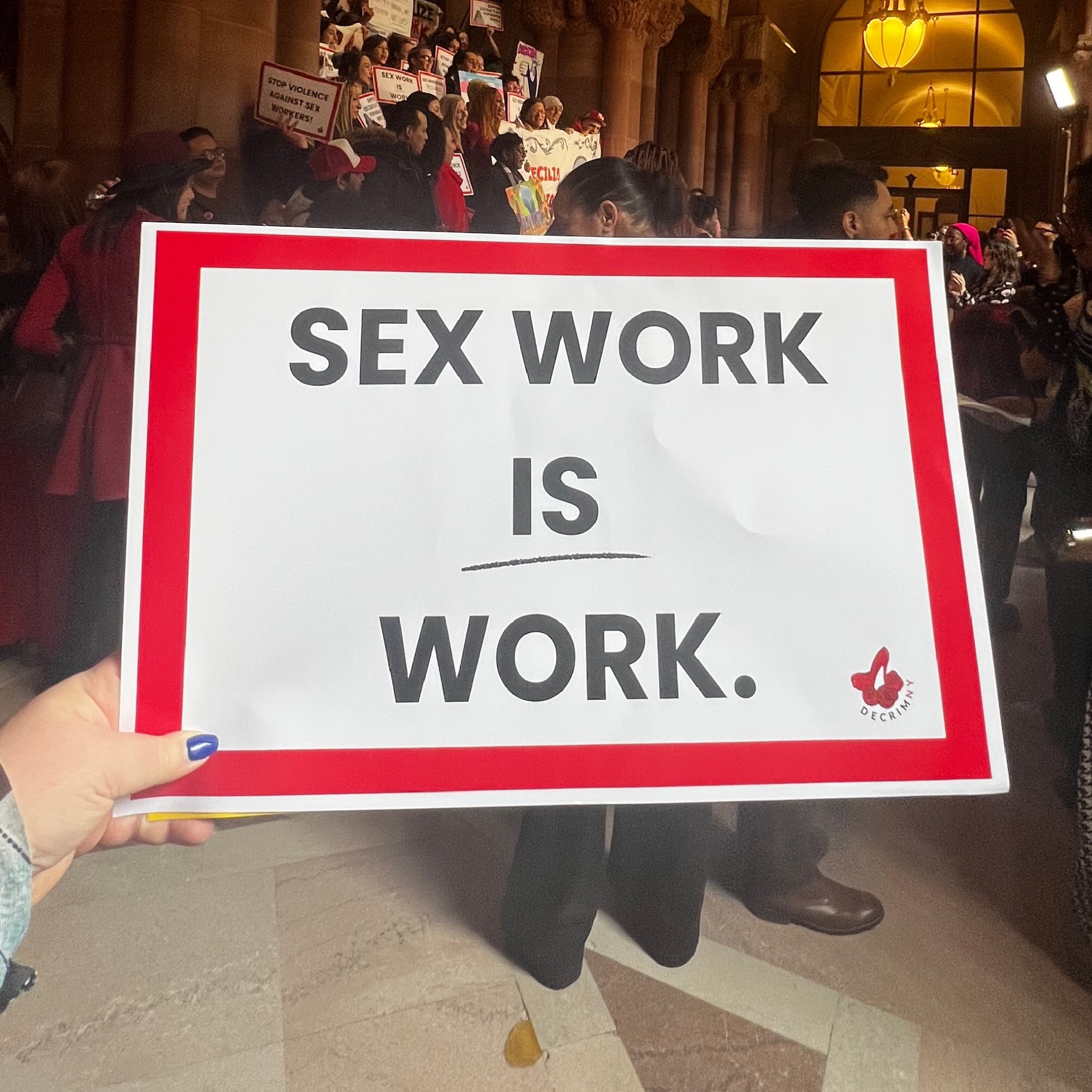
A sign says “Sex work is work” in black letters. There is a red border around the edge of the sign and Decrim NY’s logo is in the bottom right corner. ()